
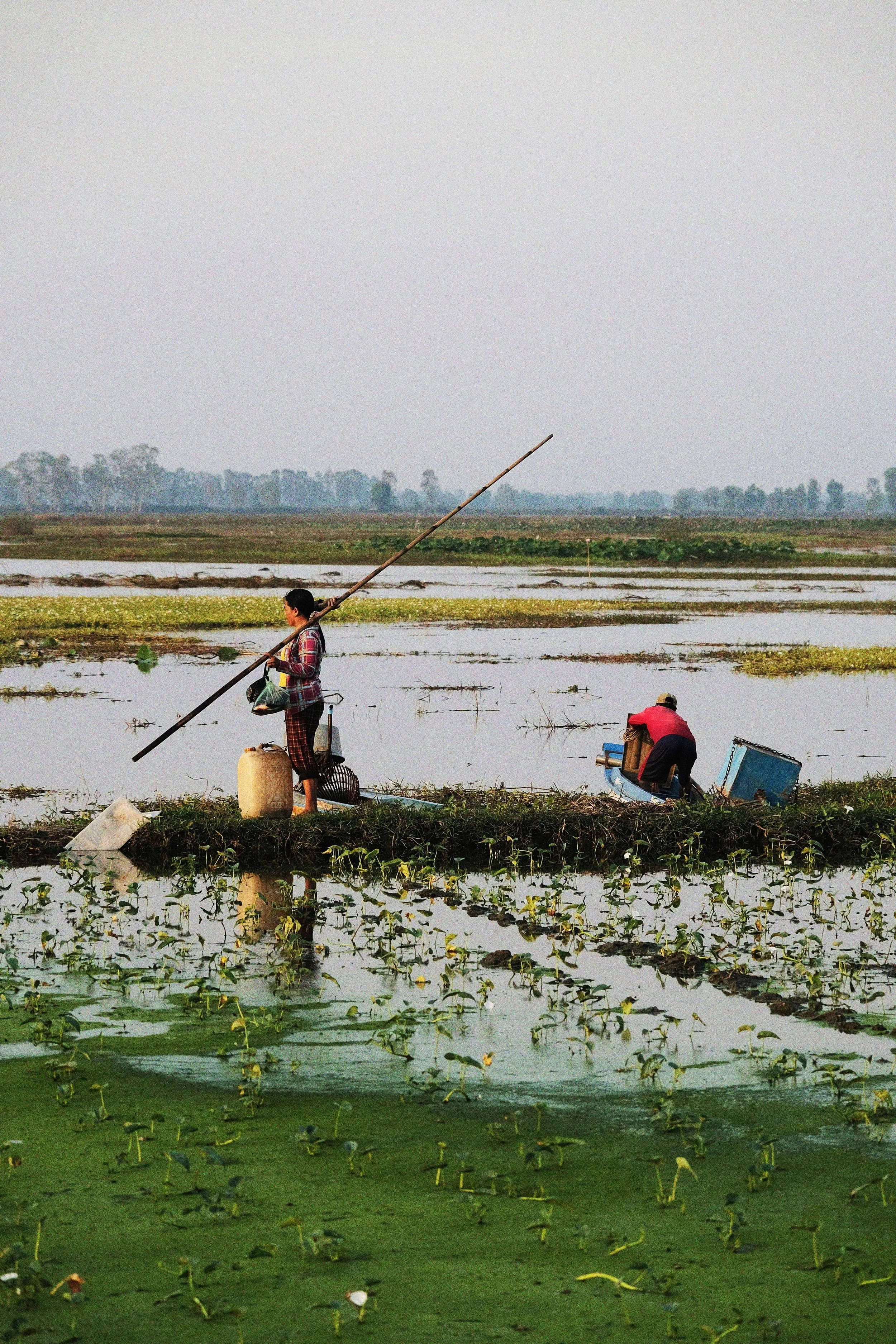
CASE STUDY 10
Organizing Women Fisherfolk Groups for Collective Power & Advocacy
Bangladesh


Context
Rising sea levels, saline water intrusion, and frequent cyclones disrupt livelihoods, displace families, and erode health systems in coastal Bangladesh. These environmental stresses exacerbate SRHR challenges. Early marriage, unsafe abortion, maternal mortality, gender-based violence, and inadequate menstrual hygiene management are common. Fisher women, who often spend 12–14 hours in saline water, report high rates of uterine infections, infertility, and miscarriages; Yet, they are frequently excluded from government social support programs, intensifying their vulnerability.
Organization
Badabon Sangho is a women-led organization based in the southwestern coastal belt of Bangladesh, specifically in Bagerhat and the Mongla sub-district near the Sundarbans mangrove forest. Established to defend women’s land rights, the organization soon expanded its scope as climate change impacts increasingly threatened women’s livelihoods and health. Badabon Sangho now works at the intersection of climate change, gender justice, and sexual and reproductive health and rights (SRHR).
Approach
Badabon Sangho takes a multi-layered approach to address these intersecting crises. The organization has established over 25 women’s groups in coastal villages, bringing together fisherfolk and farmers to collectively voice their needs. These groups also provide peer support, microloans, and advocacy platforms for addressing issues such as child marriage and menstrual health. Badabon Sangho has pushed for government recognition of women fishers, which would enable them to qualify for state subsidies and social protection during state-imposed fishing bans.
In collaboration with ARROW, Badabon Sangho conducted one of the first scoping studies in Bangladesh on the nexus of climate change and SRHR. The study documented salinity-related reproductive health conditions, increases in child marriage, and the disproportionate burdens women face in climate-disaster-prone areas.
Results to Date
Over 25 women’s groups and three registered women’s fisherfolk associations now operate independently, pooling their savings, offering small loans, and organizing to demand their rights. Government policy has shifted to recognize women fisherfolk, with provisions to include their names in official support systems, although this has been delayed in practice.
Through more than 20 workshops to date, they train young people and women leaders in climate adaptation, gender equality, and SRHR rights, building grassroots champions for policy advocacy.
Participating women report improved access to government health facilities, reductions in child marriage, and growing confidence in demanding services.
Findings from the scoping study on how fisher women face unique and intensified health vulnerabilities due to climate change have been shared with climate-focused and health-focused government officials at the district and national levels.
“We thought we could not support women one by one, so we formed groups of women living in the coastal belt. Now, fisherfolk women who spend 12 to 14 hours in saline water have organized themselves, despite their livelihoods being destroyed by soil salinity and cyclones.”
LIPI RAHMAN
Executive Director, Badabon Sangho
PDF Resilience Rising: Case Studies of Impact at the Climate-SRHR Nexus Across South Asia